
Loading

- Home
- About Tradex
- Products & Services
- Foodservice
- Seafood News
- School of Fish

EP 815 | AIRED 10/19/2026
Pangasius Market Outlook: Growing Exports, Rising Costs and Whitefish Buying Opportunities
October 19, 2026 - Vietnam’s pangasius market enters the fourth quarter of 2026 with growing export revenue, expanding demand across several international markets, and rising operating costs. For seafood buyers evaluating frozen whitefish, pangasius offers opportunities in fillet, breaded and portioned programs, although its competitiveness varies by destination, supplier and product specification.

Vietnam Pangasius Exports Reach US$1.74 Billion
Vietnam’s pangasius export value reached US$1.74 billion during January–September 2026, an increase of 10.7% year-over-year. These figures measure export revenue; they do not establish an equivalent increase in shipment volume. Production has remained steady, while processor purchasing for year-end shipments has supported farm-gate prices. The market continues to balance dependable farmed supply against higher operating costs and uneven demand across export destinations.
Export Growth Varies by Market
China and Brazil supported Vietnam’s pangasius export growth through August. Exports to markets covered by the Comprehensive and Progressive Agreement for Trans-Pacific Partnership—including Japan, Canada, Mexico and Australia—reached US$264 million during January–August 2026, up 12% year-over-year. That increase represents the combined market group, rather than the growth rate of each individual country. Brazil also recovered following a difficult first half, with pangasius export value reaching US$124 million through August, up 8%. These destinations are helping offset weaker U.S. business and giving Vietnamese processors more opportunities to diversify their sales.
Japan Highlights Pangasius’ Whitefish Price Advantage
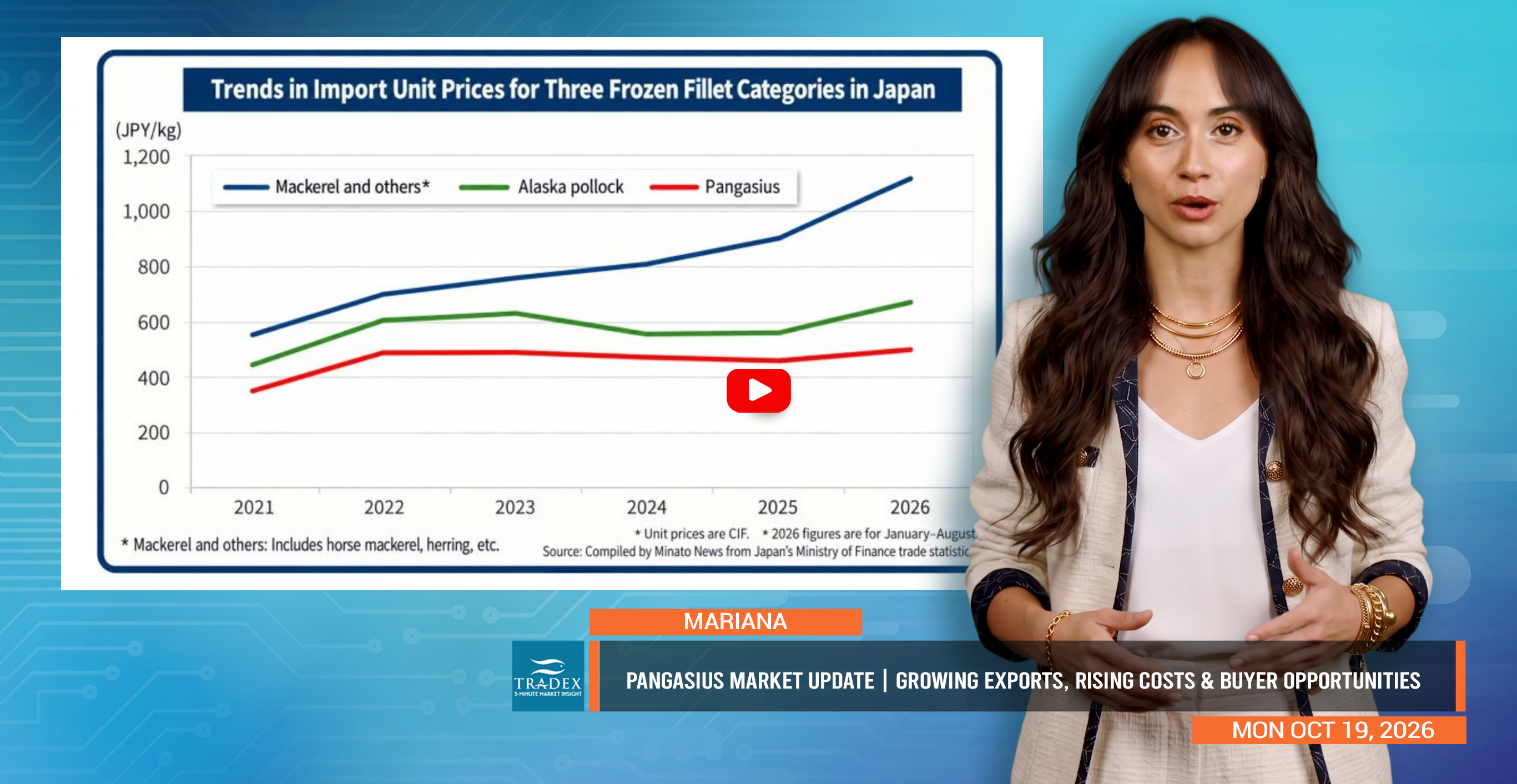
Vietnamese pangasius export value to Japan increased 20.8% to US$36.3 million during January–August 2026. Japanese trade statistics compiled by Minato News show that frozen pangasius fillets averaged 496 yen per kilogram on a CIF import basis, compared with 655 yen per kilogram for Alaska pollock, during the same period. Pangasius therefore averaged approximately 24% below pollock. CIF values include cost, insurance and freight to the import destination. These historical import averages cover different product mixes and should be used as market context when comparing current supplier offers, specifications and delivery terms. Japan’s growing use of pangasius also extends beyond traditional frozen fillets. Umios, formerly Maruha Nichiro, is developing breaded pangasius products, while Kyokuyo offers sliced pangasius for sushi toppings. These applications demonstrate opportunities for prepared and portioned products where pricing, consistency and customer acceptance support substitution.

Advertise Here: advertising@tradexfoods.com
U.S. Pangasius Trade Faces Cost and Demand Pressure
The U.S. market presents a different picture. According to VASEP, Vietnam’s pangasius export value to the United States declined nearly 14% during January–August 2026, with August alone falling more than 50% year-over-year.
Higher import tariffs, anti-dumping duties and weak demand remain major pressures. Applicable duties can vary by supplier, making the quoted product price only one component of the purchasing decision.
Buyers should compare the total landed cost of each offer, including applicable duties, freight, handling and delivery terms. A competitive export price may produce a different result once destination-specific costs are included.
Changing Cod, Haddock and Pollock Markets Affect Substitution
The wider whitefish market is also changing. Atlantic cod and haddock headed-and-gutted prices are correcting as elevated prices weaken demand, while pollock pin-bone-out fillet blocks remain constrained.
Pangasius retains substitution potential, particularly in breaded, portioned and other value-focused programs. However, buyers should reassess the savings against current competing offers and the requirements of the finished product.
Comparisons should account for net weight, glaze, treatment, portion size, usable yield and cooking performance. Customer acceptance and required certifications also influence whether a lower purchase price translates into a suitable alternative.

Q4 Outlook: Rising Costs, but Uneven Pricing Pressure
Higher fuel and input costs are pressuring Vietnamese producer margins. Vietnam’s agriculture ministry anticipates firmer pangasius farm-gate prices during the fourth quarter, supported by seasonal purchasing and potential supply tightening.
However, earlier holiday shipments and softer demand in some destinations could limit further increases. Marine-ingredient supply concerns add a feed-cost risk to monitor, with the impact depending on feed formulations and supplier contracts. These pressures do not yet confirm an immediate increase in finished-fillet prices.
Our Recommendation for Seafood Buyers
Our recommendation is to secure essential pangasius requirements in measured increments and evaluate opportunities in breaded, portioned and other value-focused programs.
Compare current landed costs and usable yields against competing whitefish, confirm product specifications and delivery schedules, and match additional coverage to confirmed demand. Pangasius can offer meaningful value, particularly where buyers need a consistent whitefish ingredient, but purchasing decisions should reflect the economics of the specific program.
Watch Tradex Foods’ 3-Minute Market Insight, Episode 815, for this week’s pangasius market update. Follow our LinkedIn, Facebook and X accounts for mid-week updates, and subscribe for the latest seafood market developments.
--- If you’re not already, be sure to subscribe to our 3-Minute Market Insight for seafood updates and insights delivered right to your inbox.