
Loading

- Home
- About Tradex
- Products & Services
- Foodservice
- Seafood News
- School of Fish

EP 812 | AIRED 09/28/2026
European Seafood Market Update: Tight Wild Supply Meets Selective Buying Opportunities
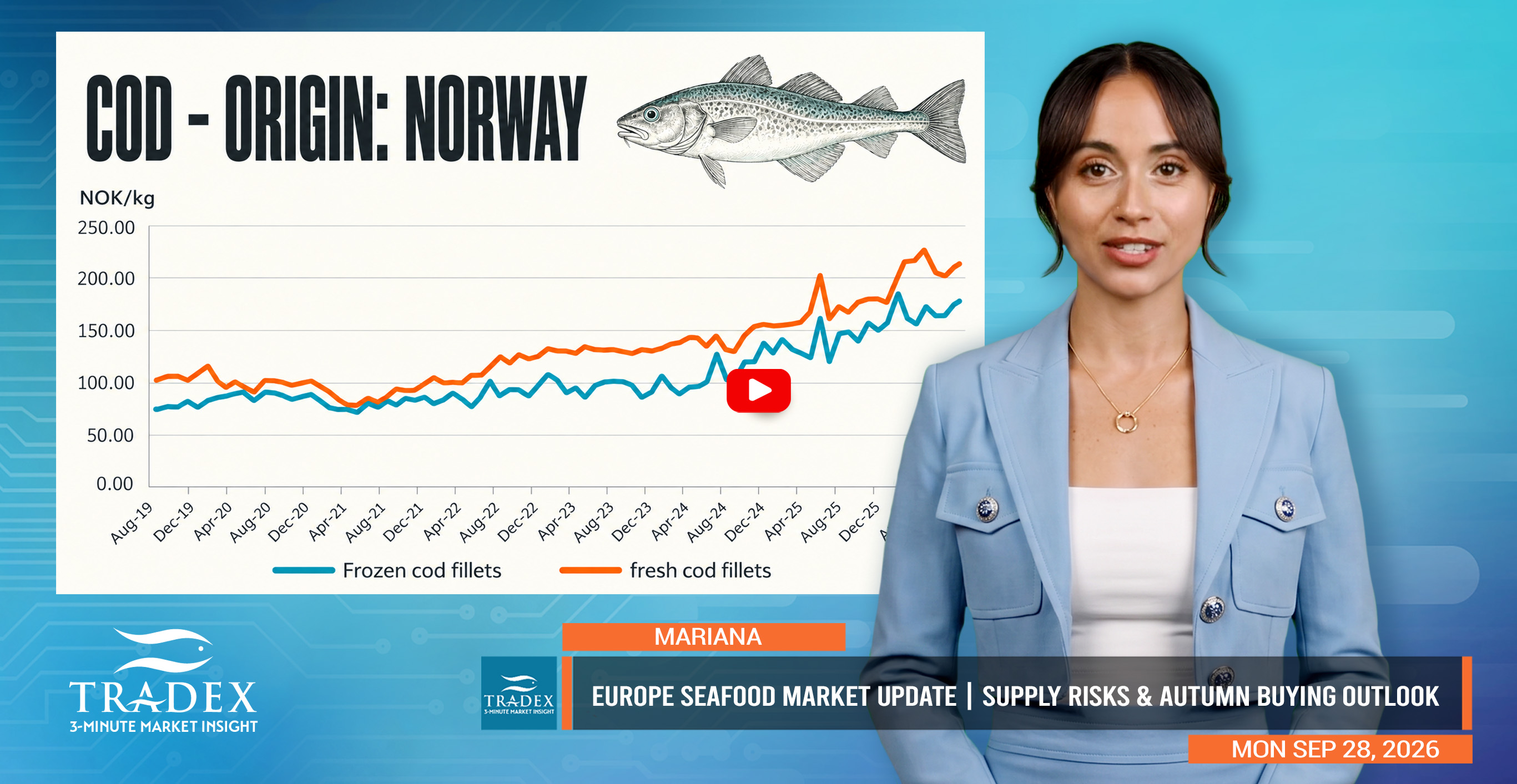
September 28, 2026 - European seafood markets enter September broadly firm but controlled, with wild-supply constraints, seasonal foodservice demand, and rising aquaculture input costs maintaining pressure across several key categories. Although most market prices remain stable, buyers face a more selective procurement environment: certain wild-capture species require earlier coverage, while others offer useful value opportunities for the autumn buying period.

Salmon supply is more comfortable than in many wild-capture categories. Norway exported a record 147,891 tonnes in July, up 10% year-on-year, supported by favorable production conditions and larger average fish. However, fresh whole salmon export prices still rose 8% as strong demand from China and other major destinations absorbed much of the additional volume. Buyers should find salmon more available than wild cod, but should not expect substantial price weakness.
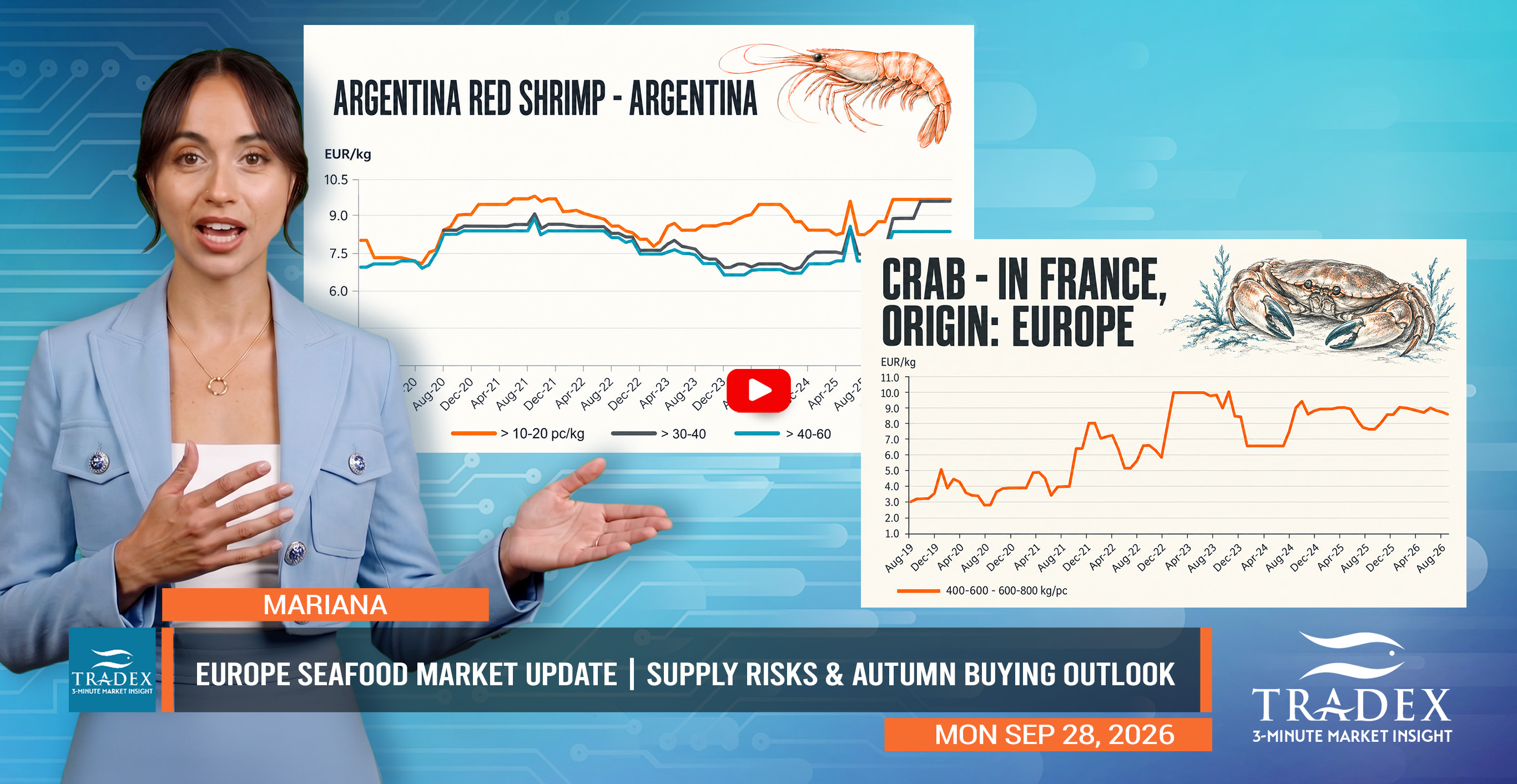
Shrimp markets remain mixed across Europe. High inventories and slow purchasing in Spain are improving negotiating conditions, while lower import costs in France have not yet translated into softer wholesale pricing. Italian summer shrimp prices have edged higher, reinforcing the importance of evaluating supply, inventory, and pricing by destination market rather than treating Europe as a single shrimp market.
Pangasius continues to stand out as a value-oriented whitefish option. Soft foodservice demand and intense competition are keeping prices under pressure, creating an opportunity for buyers seeking a dependable, cost-effective substitute in retail, foodservice, and promotional programs.

Advertise Here: advertising@tradexfoods.com
Pelagic markets are considerably tighter. Mackerel and sardine prices remain elevated because of limited supply, while Norwegian mackerel and herring are trading at historically high values. Buyers with mackerel or sardine requirements should secure supply rather than rely on spot-market relief, particularly as demand builds toward year-end. Herring and anchovy may offer alternative options where product specifications allow.
Tuna markets are also firming as Q4 approaches. Bangkok skipjack prices increased by USD 200 per tonne and are moving toward USD 2,000 per tonne, while yellowfin supply remains tight amid solid demand from Europe, the United States, Japan, and Korea. With canneries expected to increase purchasing activity into the final quarter, earlier coverage is advisable for yellowfin and Atlantic-linked skipjack requirements.
Cephalopods offer a more favorable buying environment. Illex and Humboldt squid are available in good volumes, and weaker processor demand has softened pricing; cuttlefish has also eased with improved Atlantic supply. Premium Loligo remains tight, however, and should be treated separately from value squid programs. Mauritanian octopus has moved below its early-2026 highs but continues to be influenced by cautious buying and inventory overhang in Asian markets.
Our Recommendation: Secure forward coverage for wild cod, tuna, mackerel, sardines, and premium squid, where availability is tight and pricing risk remains to the upside. Take advantage of current value in Spanish shrimp, pangasius, Illex squid, cuttlefish, and clams, while monitoring elevated fishmeal and fish oil costs and the risk of further Peruvian anchovy constraints, which could raise costs for farmed salmon, trout, seabass, and seabream in the months ahead.
--- If you’re not already, be sure to subscribe to our 3-Minute Market Insight for seafood updates and insights delivered right to your inbox.